 Skip to main content
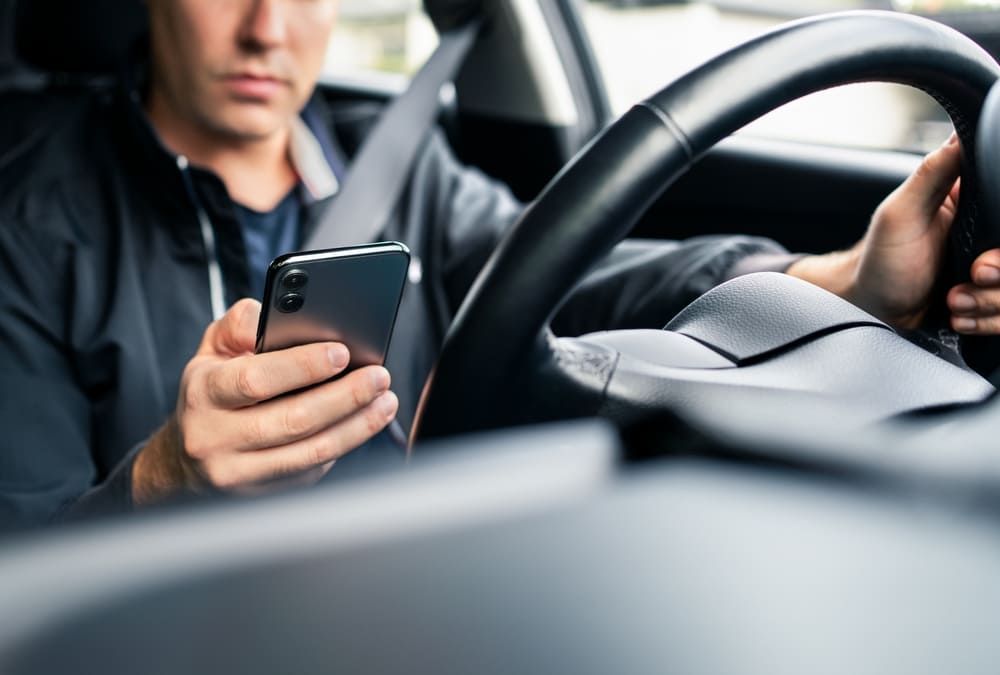
Distracted driving accidents are one of the most common and dangerous causes of serious crashes on Texas roads. Every day, drivers glance at their phones, adjust navigation apps, or take their attention off the road for just a few seconds—and those moments can lead to life-changing injuries. Distracted driving accidents often leave victims facing medical bills, missed work, and long-term pain, while insurance companies move quickly to minimize payouts to cover these expenses.
In Texas, victims of distracted driving accidents have the right to pursue compensation with the help of an experienced car accident lawyer. The purpose of this guide is to help injured victims understand Texas’s distracted driving laws, how liability works, and what legal options are available.
What Counts as Distracted Driving in Texas?
Under Texas law, distracted driving is any activity that takes a driver’s attention away from safely operating a vehicle. Distractions generally fall into three categories— and many crashes involve more than one at once.
- Visual distractions occur when a driver takes their eyes off the road. This can include reading or sending a text, checking notifications, looking at a GPS screen, or turning to look at passengers.
- Manual distractions involve taking one or both hands off the steering wheel. Common examples include holding a phone, eating, drinking, adjusting the radio, or reaching for objects inside the vehicle.
- Cognitive distractions happen when a driver’s mind is not focused on driving. Talking on the phone, daydreaming, engaging in heated conversations, or mentally rehearsing tasks can all reduce reaction time and awareness.
Even quick distractions can be dangerous. At highway speeds, taking your eyes off the road for just a few seconds means traveling the length of a football field without seeing what lies ahead. For Texas drivers navigating busy streets and congested urban areas, that loss of attention often leads to preventable crashes.

Common Types of Distracted Driving Accidents
Distracted driving can cause many types of crashes, but some scenarios repeatedly appear in Texas accident reports. These collisions often happen suddenly, giving victims little time to react.
Common types of distracted driving accidents include:
- Rear-end collisions caused by drivers looking at their phones in stop-and-go traffic
- Intersection crashes when a distracted driver runs a red light or stop sign
- Lane-drift and sideswipe accidents when drivers fail to maintain proper lane position
- Pedestrian and bicyclist collisions when drivers do not see people crossing or riding nearby
- High-speed highway crashes caused by delayed reaction times
Distracted driving is a leading cause of serious injury crashes across the state, particularly in major metro areas with heavy traffic, complex intersections, and tourist distractions. A review of Dallas car accident statistics and data from car accidents in San Antonio illustrates how distraction plays an increasing role in severe and fatal collisions statewide.
Texas Distracted Driving Laws
Texas has specific laws aimed at improving road safety. Distracted driving laws in Texas focus primarily on cellphone use but also include additional restrictions for certain drivers and locations.
Statewide Ban on Texting While Driving
Texas Transportation Code §545.4251 makes it illegal for drivers to read, write, or send electronic messages while operating a moving vehicle. This statewide texting-while-driving ban applies to most drivers and is intended to reduce crashes caused by cellphone distraction. Exceptions exist, such as using a phone to report an emergency or when a vehicle is fully stopped.
Courts and insurers often view texting behind the wheel as a clear failure to exercise reasonable care, and violating this law can result in traffic citations. In civil injury cases, a violation may serve as strong evidence of negligence.
School Zones, Teens, and Local Hands-Free Rules
Texas law includes additional distracted driving restrictions in certain situations. Drivers are prohibited from using handheld devices in active school zones, and novice or under-18 drivers face stricter limits on cellphone use. In addition, some Texas cities have adopted hands-free ordinances alongside state law, creating added responsibilities for drivers depending on where a crash occurs.
Penalties for Distracted Driving Offenses
Penalties for distracted driving violations typically include fines, which may increase if a crash results in serious injury or death. These traffic penalties are separate from civil liability. Even if a driver only receives a citation, they may still be financially responsible for medical bills, lost wages, and other damages suffered by crash victims.
How Common Are Distracted Driving Accidents in Texas?
According to recent data from the Texas Department of Transportation (TxDOT), nearly one in five crashes statewide involves a distracted driver. These crashes result in hundreds of deaths and thousands of serious injuries every year, making distracted driving one of the leading causes of traffic collisions across the state.
TxDOT distracted driving statistics highlight how distraction remains a persistent and growing safety issue on Texas roads. Yet despite public awareness campaigns and stricter laws, distracted driving continues to increase. Smartphones, in-vehicle technology, and constant connectivity make it harder for drivers to stay focused, especially during long commutes or in congested traffic.
Why Distracted Driving Is So Dangerous
Driving requires constant attention, quick reaction times, and sound judgment. Distracted driving interferes with all three. When a driver looks at a phone or focuses on something other than the road, their reaction time slows, and their ability to recognize hazards drops significantly.
During the few seconds your eyes leave the road, traffic can stop, lanes can shift, or pedestrians can enter the roadway. Even hands-free activities are not risk-free. Cognitive distractions can impair decision-making and reduce a driver’s awareness of surrounding vehicles, signals, and road conditions.
Many drivers believe they can multitask safely, but research and crash data consistently indicate otherwise. Because the risks of distraction are well known, insurers and courts rarely accept excuses for distracted behavior after a serious crash.

Liability in Texas Distracted Driving Accident Cases
Texas follows an at-fault system for car accidents. This means the driver who causes a distracted driving accident is generally responsible for the resulting damages through their insurance coverage or personal assets.
Proving Negligence and Negligence Per Se
To recover compensation, injured victims must typically prove negligence. This involves showing that the at-fault driver owed a duty of care, breached that duty by driving while distracted, caused the crash, and resulted in measurable damages.
Distracted behaviors such as texting, scrolling through apps, or looking away from the road often violate the duty of ordinary care owed to all drivers. In some cases, distracted driving may also qualify as negligence per se. When a driver violates a safety statute, such as the texting-while-driving law, that violation can create a presumption of negligence in a civil injury claim.
Comparative Fault and How It Affects Your Claim
Texas uses a modified comparative negligence system—often referred to as the 50% rule. Under this rule, injured victims may recover compensation if their percentage of fault in the accident does not exceed 50%. However, their total recovery is reduced in proportion to their percentage of responsibility.
Insurance companies frequently try to shift blame by arguing that a victim was also distracted, speeding, or otherwise careless. These arguments can significantly reduce a settlement amount or verdict if left unchallenged.
Understanding Texas’s modified comparative negligence rule and its application is critical. Legal representation from an experienced distracted driving accident lawyer can help push back against unfair fault assessments.
How a Texas Distracted Driving Accident Lawyer Can Help
Distracted driving cases often involve complex evidence and aggressive insurance tactics. Hiring an experienced car accident lawyer for distracted driving guidance protects your right to compensation and simplifies your healing process.
Investigating and Proving Distraction
Proving distraction requires more than speculation. Lawyers obtain cellphone records, vehicle data, traffic or surveillance footage, police reports, and witness statements to show what the at-fault driver was doing before the crash. In some cases, accident reconstruction experts or digital forensic specialists are used to connect distracted behavior directly to the collision.
Acting quickly is important. Phone data can be overwritten, video footage may be deleted, and witnesses’ memories can fade. Early legal involvement helps preserve key evidence before it disappears.
Dealing With Insurance Companies
Insurance companies often dispute distracted driving claims by downplaying injuries or shifting blame to the victim. A personal injury attorney handles communication with insurers, documents damages, and negotiates for fair compensation. If necessary, the case can be prepared for trial to increase leverage during settlement discussions.
Most personal injury cases are handled on a contingency fee basis, meaning there are no upfront legal fees. The attorney is only paid if they recover compensation on your behalf.
Recovering Compensation
Victims of distracted driving accidents may be entitled to compensation for both economic and non-economic losses. Recoverable damages often include medical expenses, future treatment costs, lost wages, reduced earning capacity, pain and suffering, emotional distress, and property damage. In fatal crashes, surviving family members may pursue damages through a wrongful death claim.
Unlike certain medical malpractice cases, Texas generally does not cap non-economic damages in standard auto accident claims.
Schedule A Free ConsultationHow AK Law Firm Handles Distracted Driving Accident Cases
At AK Law Firm, we take a client-first approach to distracted driving accident cases. Our goal is to handle the legal burden so you can focus on your recovery. Our team has extensive experience representing victims of motor vehicle collisions caused by distracted drivers, and we are prepared to take on insurance companies that refuse to offer fair compensation.
We provide regular communication and transparency throughout the process. Clients receive weekly case updates, 24/7 online access to their files, and help coordinating medical care when needed. This approach allows injured individuals to stay informed while getting the treatment and legal support they need.
AK Law Firm represents distracted driving accident victims throughout Texas. With offices and resources serving major metro areas such as Houston, Dallas, and San Antonio, our team is equipped to investigate crashes throughout the state and pursue full compensation for our clients.
If you or a loved one has been injured by a distracted driver, contacting a lawyer as soon as possible can help protect your rights and preserve critical evidence before it gets lost.
Call now to schedule a free consultation with a distracted driving accident lawyer and learn about your options.
Call NowFAQ: Distracted Driving Accidents in Texas
Is texting while driving always illegal in Texas?
Yes. Texas law generally prohibits drivers from reading, writing, or sending electronic messages while operating a vehicle. Limited exceptions apply, such as emergency communication or when a vehicle is fully stopped. Additionally, some local ordinances and school zone rules impose stricter hands-free requirements in certain areas.
How do you prove the other driver was distracted?
Proving distraction often involves multiple forms of evidence. This may include cellphone records, onboard vehicle data, traffic camera footage, surveillance videos, police reports, witness statements, or social media activity showing phone use near the time of the crash. A distracted driving accident lawyer can use subpoenas, investigators, and expert analysis to gather and interpret this evidence.
Can I still recover compensation if I was also distracted?
Possibly. Under Texas’s modified comparative negligence system, injured victims can usually recover compensation if they are less than 50% at fault for the accident. Recovery values are reduced by the individual’s share of responsibility. Insurance companies often exaggerate a victim’s fault, which is why having legal representation protects the success of your claim.
What should I do if the insurance company offers a quick settlement?
You should be cautious before accepting a quick settlement offer. Early offers often do not account for future medical treatment, long-term limitations, or lost income. Once a settlement is accepted, you typically cannot seek additional compensation later.
Schedule a consultation with a distracted driving accident lawyer to determine whether your offer is fair and if negotiating for a better outcome is necessary.


