 Skip to main content
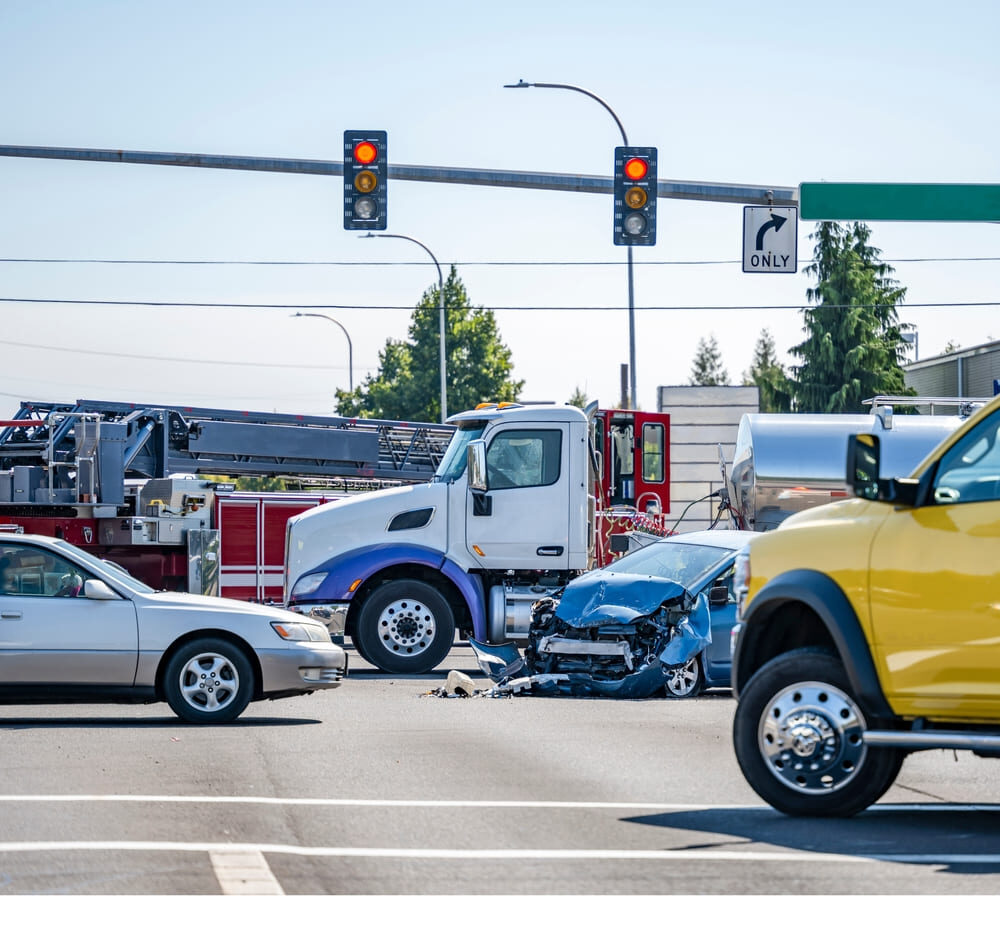
When an auto collision involves a commercial truck, the injuries are often severe, the damages are expensive, and the legal process becomes far more complicated than most people expect. Understanding truck accident causes is critical, especially because insurance companies often downplay or oversimplify what actually led to the crash in order to minimize their payouts.
After a serious truck accident, insurers may rush to blame driver error or unavoidable conditions. What they do not explain is how federal regulations, corporate pressure, poor maintenance, and unsafe practices impact the value of your insurance claim.
This guide outlines the causes of truck accidents, how to protect your rights and financial recovery, and why speaking with an experienced truck accident lawyer if you’ve been injured can help uncover what insurers prefer to keep quiet.
How Truck Accident Claims Differ From Car Accidents
Truck accident claims are fundamentally different from standard car accident cases.
Federal Motor Carrier Safety Administration (FMCSA) regulations set detailed requirements for truck driver hours of service, vehicle maintenance, cargo loading, and safety procedures. Violating these rules can directly impact liability.
Because of their size and weight, trucks require longer stopping distances and are far less forgiving in emergency situations. When a truck crash occurs, injuries are often catastrophic, and insurance companies’ financial exposure is significantly higher. As a result, insurers frequently use the complexity of trucking regulations and commercial operations to blur accountability.
Unlike car accidents, truck accident claims may involve multiple liable parties—including the driver, trucking company, maintenance providers, cargo loaders, and even manufacturers. Insurance companies often emphasize confusion around these relationships to delay claims or shift blame away from corporate negligence.
Building a strong truck accident case requires a detailed investigation of records, logs, and safety standards compliance.

The Most Common Causes of Truck Accidents
Truck accidents rarely happen for just one reason. In many cases, multiple safety failures occur simultaneously. Insurance companies tend to focus on a single explanation to limit liability, but the reality is far more complex.
Below are some of the most common truck accident causes and how insurers attempt to minimize them:
Driver Fatigue and Hours-of-Service Violations
Federal rules limit how long commercial drivers can operate their vehicles, but pressure to meet delivery schedules often pushes drivers beyond safe limits. When fatigue sets in, reaction times slow, judgment suffers, and the risk of a serious truck crash increases dramatically.
Insurance companies frequently point to driver behavior alone, ignoring systemic problems like unrealistic schedules or falsified driving logs. Electronic logging devices and hours-of-service records often reveal patterns of overwork that insurers would rather not highlight.
Fatigue-related violations can establish liability—not just for the driver, but also for the trucking company that allowed or encouraged unsafe practices.
Driver Inexperience or Lack of Proper Training
Inexperienced or poorly trained drivers may struggle with long stopping distances, wide turns, blind spots, and defensive driving during heavy traffic or severe weather. Trucking companies sometimes rush new drivers onto the road to meet demand, cutting corners during training or skipping supervision altogether.
After a truck crash, insurance companies often label the incident as driver error while ignoring employer negligence in hiring, training, or oversight. But in Texas, employers can be held directly responsible for negligent hiring or supervision.
Training records, certification history, and internal safety policies can become critical evidence in determining liability and proving the true causes of truck accidents.
Distracted Driving
Texting, onboard electronics, GPS systems, and dispatch communications can all divert a driver’s attention from the road. Combined with tight delivery deadlines, even brief distractions can have devastating consequences.
Insurance companies may attempt to shift blame onto other drivers or claim that distraction cannot be proven. However, phone records, electronic data, and vehicle monitoring systems often tell a different story.
Proving distraction can significantly impact fault and strengthen your truck accident claim.
Improperly Loaded or Poorly Maintained Trucks
Overloaded or uneven cargo can cause trucks to tip, jackknife, or lose control. Worn brakes, bald tires, and mechanical failures further increase the risk of catastrophic crashes.
Insurers often downplay mechanical issues, claiming maintenance was routine or blaming road conditions instead. Maintenance logs, inspection reports, and third-party contractor records frequently reveal overlooked safety problems that point to broader liability beyond the driver.
Speeding and Reckless Driving
Speeding is especially dangerous for commercial trucks due to their size and stopping distance. Drivers may exceed speed limits or drive too fast for conditions to stay on schedule, increasing both the likelihood and severity of a crash.
After an accident, insurers often argue comparative fault, suggesting other drivers contributed to the collision. Evidence of speeding, however, can undermine these defenses and help establish responsibility for the truck crash.
Impaired Driving
Impaired driving includes alcohol use, illegal substances, and even certain prescription or over-the-counter medications. Some drugs can reduce reaction time or alertness, putting everyone on the road at risk.
Insurance companies frequently contest impairment claims, questioning the accuracy or timing of drug tests. Toxicology reports, prescription records, and compliance with safety regulations can play a key role in proving impairment and identifying who should be held accountable.
Poor Weather or Road Conditions
Rain, fog, ice, and poorly maintained roads can contribute to serious truck accidents, including rollovers and jackknifes. Dangerous intersections, inadequate signage, and construction zones also increase risk.
Weather and road factors rarely eliminate responsibility when other safety failures are present. Insurers often argue these conditions were unavoidable. However, drivers and trucking companies are still expected to adjust speed and driving behavior based on conditions.

Why Insurance Companies Minimize Truck Accident Causes
Insurance companies have a financial incentive to narrow the explanation for truck accidents as much as possible. The fewer causes they acknowledge, the less liability they may have to accept. In many cases, insurers will reshape the narrative before all the facts are known.
Common insurance company tactics include:
- Blaming passenger vehicle drivers for the crash
- Questioning whether injuries were caused by the accident
- Hiring experts to dispute mechanical failures or fatigue
- Using delays to pressure victims into lowball settlement offers
By focusing on a single factor, insurers avoid deeper investigations that could expose safety violations, poor training, or corporate negligence. The complexity of trucking operations often gives insurers room to raise doubt despite evidence to the contrary.
Book A ConsultationFederal and Texas Trucking Regulations To Know
Commercial trucking is governed by a combination of federal and state trucking laws designed to protect public safety. When trucking companies cut corners or ignore regulations, those violations often become the foundation for establishing liability.
At the federal level, drivers must comply with FMCSA Hours-of-Service rules, which limit how long they can drive without rest. These rules exist to reduce fatigue-related accidents and are frequently examined during truck accident investigations.
Texas also enforces its own commercial driving standards. The Texas Department of Public Safety oversees licensing and compliance for commercial drivers operating in the state. Failure to follow these rules can strengthen a claim by showing negligence at both the driver and company levels.

How Causes of Truck Accidents Affect Your Claim
Proving what caused a truck accident is one of the most important factors in determining the outcome of a claim. Truck accident causes directly affect who can be held responsible, how damages are calculated, and how much compensation may be available.
In Texas, comparative fault laws can reduce compensation if an injured person is found partially responsible for the accident. Under the Texas Civil Practice and Remedies Code Chapter 33, recovery may be reduced if fault is shared. Insurance companies often use this rule to shift blame and lower payouts.
For example, if fatigue, speeding, and poor maintenance all contributed to a truck crash, insurers may attempt to isolate one factor and argue shared fault. A thorough investigation that identifies all contributing truck accident causes can protect victims from unfair fault assessments and strengthen their claims.
How AK Law Firm Can Help After a Truck Accident
Truck accidents demand a deeper level of investigation than standard injury claims. AK Law Firm successfully manages complex truck accident cases across Texas, including Houston, Dallas, and San Antonio. Our team understands how trucking companies and insurers operate and knows how to find the evidence they hope goes unnoticed.
We investigate the full scope of what caused the truck crash—including driver logs, maintenance records, training history, black box data, and regulatory compliance. By uncovering all contributing truck accident causes, we hold every responsible party accountable.
Clients never pay anything upfront for our services, and there are no legal fees unless we recover compensation for you. If you were injured in a truck accident, schedule a free case evaluation to learn about your options.
Call now to speak with a member of our team and learn how AK Law Firm can help protect your rights.
Call NowFAQ: Truck Accident Causes
What are the most common causes of truck accidents?
The most common causes of truck accidents include driver fatigue, improper training, distracted driving, speeding, impaired driving, poor maintenance, improperly loaded cargo, and hazardous weather or road conditions. In many cases, more than one factor contributes to the crash.
Can a truck driver’s employer be held responsible?
Yes. In Texas, trucking companies may be held liable for negligent hiring, training, supervision, or maintenance. Employers can also be responsible for safety violations that contribute to a truck accident, even if the driver made an error.
Does insurance always cover truck accident damages?
Insurance coverage covers most truck accident cases, but insurers often dispute liability or minimize damages. Common defenses include blaming other drivers, questioning the severity of injuries, or arguing comparative fault. This is why identifying all the causes of truck accidents is so important.
How long do I have to file a truck accident claim in Texas?
In Texas, a personal injury claim must be filed within 2 years of the accident. Missing this deadline can prevent recovery, making it essential to act as soon as possible after a truck crash.


