 Ir al contenido principal
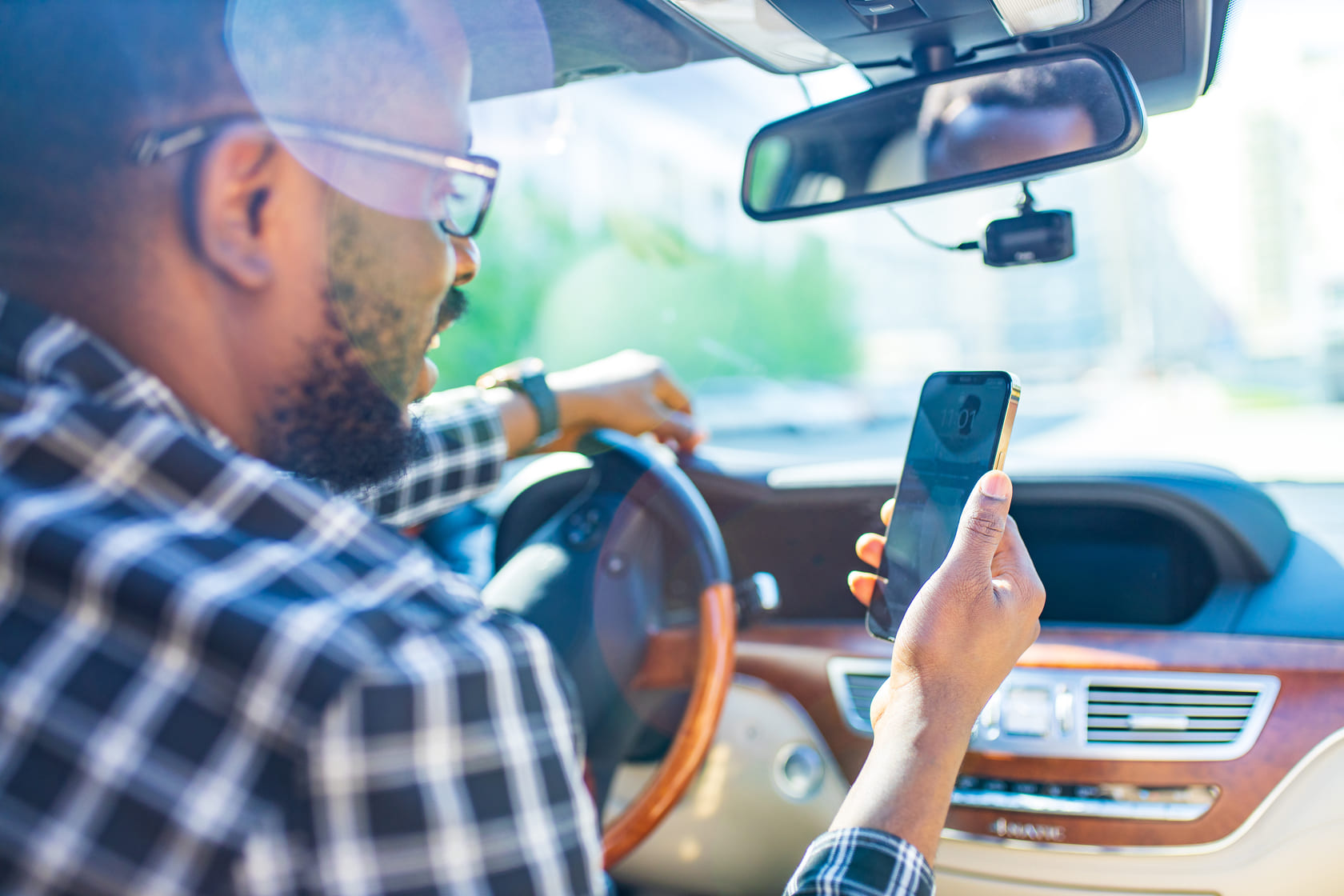
Distracted driving is not limited to texting behind the wheel. It includes any activity that takes a driver’s eyes, hands, or mind off the road, such as scrolling through social media, eating, adjusting a GPS, or reaching for an item in the back seat.
This guide breaks down distracted driving statistics in Texas, compares them to national data, and explains how Texas distracted driving laws apply to real-world crashes. For those interested in preventing distracted driving accidents, this data illustrates how common and foreseeable these crashes have become across the state—and how to avoid them.
Key Distracted Driving Facts in the US and Texas
Nationwide data consistently shows that distraction plays a role in thousands of fatal and life-altering crashes each year. According to the Departamento de Transportes de Texas (TxDOT), distraction remains one of the leading contributing factors in reported crashes across Texas roadways.
National Distracted Driving Statistics (Recent Years)
At the national level, distracted driving remains a persistent safety issue despite years of public awareness campaigns and state laws. 2023 federal estimates approximate that 324,819 people were injured in crashes involving distracted drivers, and 3,275 people were killed, accounting for roughly 8% of all traffic-related deaths nationwide.
En 2025 SafeTREC Traffic Safety Facts: Distracted Driving report confirms that distraction continues to play a measurable role in serious collisions year after year. Even when distraction is underreported, the available data shows that thousands of families are affected annually.
Según NHTSA’s 2023 distracted driving statistics, about 5% of drivers involved in fatal crashes were reportedly distracted at the time of the collision. Young drivers aged 15 to 20 consistently show the highest proportion of distraction involvement in fatal wrecks, reflecting higher rates of phone use and in-vehicle multitasking.
These national distracted driving facts provide a critical baseline for comparison, justifying why states like Texas continue to focus on education, enforcement, and injury prevention.
Texas Distracted Driving Statistics
Según TxDOT distracted driving statistics, nearly one in five crashes on Texas roads in 2024 involved a distracted driver, with 373 people killed and 2,587 others suffering serious injuries. These figures place distracted driving as the second-leading cause of crashes in Texas, surpassed only by speeding.
While distraction is sometimes underreported in crash investigations, the consistency of these numbers across multiple sources demonstrates that distracted driving is no longer a marginal issue. It is a central traffic safety concern affecting drivers in urban, suburban, and rural areas throughout the state.
How Texas Compares To Other States
National safety guidance from NHTSA reinforces that distraction remains a nationwide problem, but regional distracted driving statistics highlight how urgently the issue affects Conductores de Texas.
Texas naturally reports higher crash totals than most states because of its population size, roadway mileage, and traffic density. However, when it comes to distracted driving deaths, Texas ranks among the states with the highest numbers each year:
- Distraction accounts for about 8% of all traffic deaths across the United States.
- Distraction contributes to close to 20% of all reported crashes in Texas.
This means that distraction accounts for a larger share of total crashes in Texas than the national average, even after accounting for the state’s larger population.

Texas Distracted Driving Laws and Phone Ban
Texas enforces a statewide texting-while-driving ban, along with additional restrictions in certain situations, such as school zones and for specific drivers.
Below are some of the key distracted driving laws in Texas.
Texas Transportation Code §545.4251 – Texting While Driving Ban
En Texas Transportation Code §545.4251, drivers may not use a portable wireless communication device to read, write, or send electronic messages while operating a moving motor vehicle. This includes texting, emailing, and other forms of electronic messaging. Exceptions include using your device to make an emergency call or using it while the vehicle is stopped.
This law is a primary offense, meaning a police officer may stop a driver solely for suspected texting while driving. Fines can increase significantly when texting contributes to a crash that causes injuries or death. And because this statute sets a clear legal standard, violating it typically plays a significant role in fault determination after a collision.
Texas Phone Ban in School Zones and Local Hands-Free Ordinances
When school zone signs are present and the zone is active, drivers in Texas cannot use a handheld mobile device unless the vehicle is stopped or the device is being used in a hands-free manner.
Many Texas cities have adopted local hands-free ordinances that place stricter limits on phone use while driving. In busy cities such as San Antonio and Austin, drivers must use hands-free technology for most phone functions, including calls. These local rules do not override state law, but they do impose additional obligations on drivers traveling within city limits.
Violations of school zone bans or local ordinances may result in traffic citations and can also be used as evidence of negligence when a distracted driver causes a collision.
Texas Distracted Driving Law and Civil Liability
Texas distracted driving laws play an important role in personal injury claims after a crash. When a driver violates the texting-while-driving statute and causes a collision, that violation can support a claim of negligence.
In some cases, a texting violation may be treated as negligence per se, meaning the law itself establishes a breach of duty if the violation directly leads to a crash. This can significantly strengthen an injured person’s case by justifying what a “reasonable driver” should have done in similar circumstances.
Texas also follows a modified comparative fault system. Under Texas Civil Practice & Remedies Code §33, drivers who are more than 50% at fault for a collision are barred from recovering damages. Injured victims, however, can still pursue compensation as long as they are less than 50% responsible for the crash.
Distracted Driving Facts Texas Drivers Should Know
Distracted driving often occurs in everyday situations, and even brief lapses in attention can have devastating consequences.
Types of Distractions and Risk
Distraction generally falls into three main categories:
- Visual distraction, when a driver takes their eyes off the road
- Manual distraction, when a driver removes one or both hands from the wheel
- Cognitive distraction, when a driver’s mind is focused on something other than driving
Texting is especially dangerous because it combines all three types at once. At highway speeds, you can travel the length of a football field in the few seconds it takes to read or send a text. During that time, traffic conditions can change dramatically, leaving little opportunity to react.
High-Risk Groups and Behaviors
National distracted driving statistics show that young drivers have the highest proportion of distraction involvement in fatal crashes. Surveys consistently report higher rates of texting, app use, and social media engagement while driving among teens and young adults.
Texas crash data also points to elevated numbers of distracted driving wrecks in large urban counties such as Dallas, Harris, and Travis. Heavy congestion, long commutes, and smartphone use increase exposure and risk in these areas.
Why Texas Distracted Driving Numbers Stay High
Despite increasing education and enforcement efforts, distracted driving continues to evolve alongside technology and driving habits.
One key issue is that Texas relies on a partial phone ban, rather than a statewide handheld ban. While texting is prohibited, other forms of phone use may still be legal in many situations, blurring the lines for drivers and reducing compliance. At the same time, smartphone dependence, in-car touchscreens, and constant notifications encourage multitasking while driving.
Long commutes, congested highways, and fast-paced work cultures also increase the temptation to check messages, emails, or navigation apps while driving. Even hands-free technology can contribute to cognitive distraction by diverting a driver’s attention from traffic conditions.
TxDOT’s Talk. Text. Crash. campaign underscores the seriousness of the issue. Texas has not recorded a single deathless day on its roadways in more than two decades, and distraction remains a major contributor to that ongoing trend.

How Distracted Driving Statistics Affect Texas Injury Claims
Distracted driving statistics illustrate the sad reality that phone-related distraction is a foreseeable danger, not an isolated or unpredictable event.
When a crash involves suspected distraction, data from TxDOT and national agencies can help establish context. Insurers, courts, and juries recognize that distracted driving is a leading cause of serious crashes, which can make it harder for at-fault drivers to downplay the risks of their behavior.
Using Data and Phone Records to Prove Distraction
In individual cases, statistics alone are not enough. Abogados de accidentes de tráfico often rely on case-specific evidence to show that a particular driver was distracted at the time of a crash. This may include phone records, vehicle data, app usage logs, dashcam footage, and witness statements.
In some cases, expert testimony is used to explain how distraction affected reaction times or vehicle control. Evidence demonstrating that a driver was texting, scrolling social media, or actively using an app moments before a collision can be especially persuasive to insurers and juries.
Damages in Distracted Driving Cases
Victims of distracted driving crashes may be entitled to compensation for a wide range of losses. Common damages in these cases include:
- Medical expenses
- Future treatment costs
- Salarios perdidos
- Reduced earning capacity
- Daños materiales
- Dolor y sufrimiento
In fatal crashes, surviving family members may pursue wrongful death damages for funeral costs, loss of financial support, and loss of companionship. In particularly egregious situations, such as repeat texting violations, courts may also award punitive damages to punish and deter reckless behavior.
Schedule A Free ConsultationHow AK Law Firm Helps Distracted Driving Victims in Texas
AK Law Firm helps distracted driving accident victims build strong cases and secure maximum compensation.
Building Strong Evidence-Backed Cases
By focusing on both the legal details and the human impact of a crash, AK Law Firm will help you pursue fair compensation under Texas law. We build cases by collecting phone records, witness statements, crash scene evidence, and expert analysis to show how a specific driver’s distraction caused a collision.
Nuestra Abogados de accidentes de tráfico en Texas handle negotiations with insurance companies, prepare cases for trial when necessary, and ensure that every client’s injuries and long-term losses are fully documented.
Serving Distracted Driving Victims Across Texas
AK Law Firm is committed to transparent communication, attorney accessibility, and client-first service. We represent injured clients in major cities and communities throughout the state, including Houston, Dallasy San Antonio. Our firm understands how statewide distracted driving laws and local phone ordinances can affect injury claims across different jurisdictions.
We also work on a contingency-fee basis, meaning there are no upfront costs, and attorney’s fees are paid only as a percentage of successful recoveries.
Call now to speak with a legal team that understands how distracted driving statistics and Texas law intersect in serious injury cases.
Call NowFAQ: Distracted Driving Statistics and Texas Law
How many distracted driving crashes happen in Texas each year?
TxDOT reports that nearly one in five Texas crashes in 2024 involved a distracted driver. That same year, 373 people were killed, and 2,587 were seriously injured in distraction-related crashes statewide.
What is the Texas phone ban for drivers?
Texas law bans reading, writing, or sending electronic messages while driving under Transportation Code §545.4251. Handheld phone use is also prohibited in active school zones, with many cities enforcing broader hands-free ordinances.
Violating these laws can lead to fines and may support a negligence claim if a distracted driver causes a crash while using a phone illegally.
Are distracted driving statistics useful in my injury case?
Yes. Statistics from TxDOT and NHTSA illustrate that distracted driving is widely recognized as dangerous and unreasonable behavior. This can support arguments that drivers who texted or used a phone while driving acted negligently.
However, statistics alone are not enough. Case-specific evidence, such as phone records, video footage, or witness testimony, is still required to prove that the other driver was actually distracted at the time of the crash.


