 Ir al contenido principal
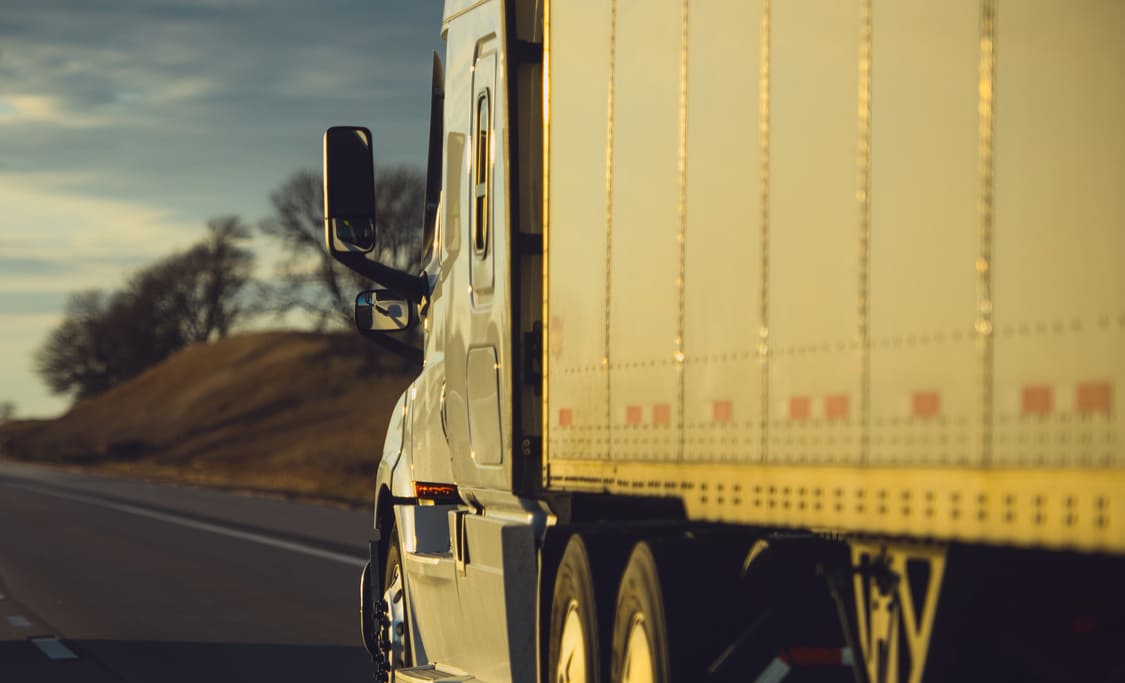
A commercial vehicle accident is a crash involving a vehicle used for business purposes, such as a semi-truck, delivery van, company pickup, or bus. Since these cases are governed by specialized state and federal rules, the legal aftermath is often far more complex than in ordinary passenger-car accidents.
Commercial vehicle accidents often result in more severe injuries and higher-value claims due to the size of these vehicles and the involvement of multiple potentially liable parties.
If you’ve been injured in an accident involving a commercial vehicle, this guide is intended to help you understand your rights. Referencing commercial vehicle accident statistics, we will outline the most common causes and injuries, how these factors impact your right to compensation, and why contacting an experienced truck accident lawyer significantly improves your recovery process.
Commercial Vehicle Accidents in Texas and Nationwide
With its major highways, heavy freight traffic, and a growing population, Texas is a national hotspot for commercial vehicle accidents. Understanding how often these wrecks occur and where they happen provides important context for injured drivers considering their legal options.
Texas Commercial Vehicle Accident Numbers
Texas consistently leads the nation in commercial motor vehicle crashes. According to data compiled from the TxDOT, there were more than 39,393 commercial motor vehicle crashes statewide in 2024. These crashes resulted in 608 deaths and 1,601 serious injuries.
Commercial vehicle crashes account for more than 13% of all fatal trucking accidents in the United States, with large metro areas like Houston seeing thousands of these wrecks each year. Heavy traffic, long-haul freight routes, and dense urban driving conditions all contribute to the elevated risk Texas drivers face.
Large Truck and Bus Crashes in the United States
Commercial vehicle accidents are not limited to Texas. FMCSA Large Truck and Bus Crash Facts shows that 6,050 large trucks and buses were involved in fatal crashes nationwide in 2022—representing a 2% increase over the prior year—with hundreds of thousands more involved in injury and property-damage-only crashes.
In many cases, another vehicle encroaching into a truck’s lane is identified as a critical pre-crash event—a factor closely tied to well-documented truck accident causes. These national trends underscore why commercial vehicle accidents demand a higher level of investigation and accountability than standard car accidents.

What Counts as a Commercial Vehicle Accident?
In Texas, collisions are classified as commercial vehicle accidents when they involve at least one vehicle used for commerce or owned or operated by a business or government entity at the time of the crash. This includes vehicles that:
- Transport goods
- Deliver packages
- Carry passengers for pay
- Perform services for an employer
Even company-owned cars used for work purposes may trigger commercial insurance policies. It is the responsibility of your commercial vehicle accident attorney to understand and determine which legal rules apply to your case.
Common Types of Commercial Vehicles in Texas Crashes
Some of the most common vehicles involved in Texas commercial vehicle accidents include:
- 18-wheelers and tractor-trailers
- Box trucks and moving trucks
- Delivery vans operated by companies like Amazon, UPS, and FedEx
- Oilfield and construction trucks
- Utility and service vehicles
- Buses and shuttle vans
- Company-owned cars or pickup trucks used for work
Any of these vehicles can trigger higher insurance requirements and additional regulatory obligations in the event of a collision. As a result, crashes involving commercial vehicles often require detailed investigations.
How Commercial Vehicle Accidents Differ From Regular Car Wrecks
Commercial vehicle accidents are different from typical passenger car crashes in several important ways:
- Commercial vehicles are usually much heavier and larger, which increases the likelihood of catastrophic injuries such as traumatic brain injuries, spinal damage, and multiple fractures.
- Commercial vehicle accidents often involve multiple insurance policies, including coverage for the driver, the employer, and, in some cases, third parties. This can increase available compensation but also makes claims more aggressively contested.
- Commercial vehicle accidents often yield specialized evidence, including electronic logging device (ELD) data, black-box records, driver qualification files, maintenance and inspection reports, and internal company communications.
Trucking companies and bus operators are also subject to strict truck accident laws enforced by the state and the Federal Motor Carrier Safety Administration (FMCSA). Violations of driver qualification standards, hours-of-service limits, inspection requirements, or drug and alcohol testing rules can be powerful evidence of negligence.
Liability in Commercial Vehicle Accidents – Who Can Be Held Responsible?
One of the biggest differences between commercial vehicle accidents and passenger car wrecks is who can be held legally responsible. These cases often involve multiple liable parties beyond the driver, which can make claims more complex and increase the amount of insurance coverage available to injured victims.
Identifying every responsible party is a critical step in building a strong caso de accidente de camión, as overlooking even one source of liability can limit a victim’s ability to recover full compensation.
The Commercial Driver
Commercial drivers can be held directly liable for crashes caused by their negligence. Common forms of commercial driver negligence include:
- Speeding or unsafe lane changes
- Distracted driving, including phone use
- Fatigue or hours-of-service violations
- Conducir bajo los efectos de las drogas o el alcohol
- Failing to follow traffic laws or FMCSA safety rules
In many cases, driver fault is established using specialized evidence such as logbooks, ELD data, phone records, dashcam footage, and toxicology results.
Trucking Companies, Employers, and Motor Carriers
Under Texas law, trucking companies may be liable for a driver’s negligence if the crash occurred while the driver was performing job-related duties. These employers may also face direct liability for their own unsafe practices, including:
- Negligent hiring or retention of unqualified drivers
- Inadequate training or supervision
- Unsafe scheduling that encourages fatigue
- Failure to inspect, repair, or maintain vehicles
- Ignoring safety violations or prior crashes
When businesses prioritize profit or delivery deadlines over safety, they can be held accountable for the resulting harm. These corporate failures often come to light through internal records, inspection reports, and compliance histories uncovered during an investigation.
Other Potentially Liable Parties
Depending on the facts of the case, other parties who can be held accountable for a commercial vehicle accident include:
- Maintenance or repair contractors
- Freight brokers
- Shippers or cargo loaders responsible for overloading or improper securement
- Manufacturers of defective vehicle parts or components
Commercial vehicle accident attorneys examine contracts, maintenance histories, and product records to identify all parties who may share responsibility. Doing so strengthens the claim and ensures that injured drivers are not left paying the price for someone else’s mistakes.
Damages Available in Commercial Vehicle Accident Cases
Personal injury settlements and verdicts should reflect not only the immediate financial impact of a crash but also the lasting effect it may have on a victim’s health, career, and quality of life. Because commercial vehicle accidents often involve severe injuries and long-term consequences, the damages available in these cases can be substantial.
Economic and Non-Economic Losses
Victims of commercial vehicle accidents may be entitled to recover economic damages, which cover measurable financial losses related to the crash. These often include:
- Emergency medical care and hospitalization
- Surgery, physical therapy, and rehabilitation
- Ongoing or future medical treatment
- Lost wages and reduced earning capacity
- Property damage and out-of-pocket expenses
In addition to financial losses, Texas law allows injured drivers to pursue non-economic damages. These compensate for the personal toll of an accident, such as:
- Dolor y sufrimiento
- Mental anguish
- Physical impairment
- Loss of enjoyment of life
In fatal commercial vehicle accidents, surviving family members may also seek damages for loss of companionship, emotional support, and financial contributions.
Punitive Damages and Gross Negligence
In certain commercial vehicle accident cases, courts may award punitive damages, also known as exemplary damages. These are not intended to compensate the victim, but to punish particularly dangerous behavior and discourage similar conduct in the future.
Punitive damages may be available when a driver or company acts with gross negligence, such as knowingly violating hours-of-service rules, operating a vehicle while impaired, or ignoring serious mechanical defects.
Evidence of repeated safety violations, prior crashes, or regulatory enforcement actions can help establish a pattern of reckless conduct that supports such claims.
How Commercial Vehicle Accident Settlements Are Calculated
There is no fixed formula for calculating a commercial vehicle accident settlement. Case value depends on several factors, including:
- The severity and permanence of the injuries
- Length of recovery and future medical needs
- Lost income and impact on earning ability
- Strength of the evidence proving liability
- Comparative fault, if any
- Available insurance policy limits
Because trucking companies and other commercial operators often carry higher insurance limits than individual drivers, experienced attorneys often secure larger settlements in commercial vehicle accident cases than in passenger car wrecks involving similar injuries.
Schedule A Free Consultation
How AK Law Firm Handles Commercial Vehicle Accident Claims
Your commercial vehicle accident case demands fast action, a detailed investigation, and a legal team that understands bothTexas injury law and federal transportation regulations.
At AK Law Firm, we focus on protecting injured drivers by building strong, evidence-backed claims from day one.
Detailed Investigation and Evidence Preservation
Commercial vehicle accident claims often hinge on evidence that can disappear quickly. Our truck accident lawyers act quickly to protect your case by sending spoliation letters, securing crash reports, and obtaining critical electronic data, such as ELD logs and black box records.
We also collect vehicle maintenance files, driver qualification records, and company safety policies to identify regulatory violations and patterns of negligence. Our team works closely with accident reconstruction experts, medical professionals, and economists to connect safety failures to the crash and fully document the personal and financial impact of your injuries.
Nuestra Texas truck accident lawyers understand how to negotiate with aggressive commercial insurers and take your case to trial if a fair settlement offer cannot be reached.
Advocating for Injured Drivers Across Texas
AK Law Firm represents victims of commercial vehicle accidents in communities across Texas. We handle communication with insurance companies, negotiations, and litigation so our clients can focus on healing.
Our firm works on a contingency-fee basis, meaning you pay no upfront attorney’s fees and we only get paid if you win. We believe clear communication, honest guidance, and a recovery-first legal strategy should be accessible to all injured Texans, regardless of their financial position.
Supporting Seriously Injured Victims Across Houston, Dallas, and San Antonio
Commercial vehicle accidents often result in life-altering injuries that require months or years of treatment. With offices in Houston, Dallasy San Antonio, AK Law Firm supports injured drivers throughout Texas. We manage insurer communications, protect clients from pressure to accept quick settlements, and pursue compensation that reflects the full scope of their injuries.
If you or a loved one was injured in a commercial vehicle accident, call now to discuss your options during a free consultation.
Call NowFAQ: Commercial Vehicle Accidents
What is considered a commercial vehicle in Texas?
A commercial vehicle generally includes any vehicle used to transport goods or passengers for business purposes. This can include semi-trucks, box trucks, delivery vans, buses, and company-owned cars or pickups. Some vehicles also qualify as “commercial motor vehicles” under federal rules based on weight or passenger capacity.
Who can I sue after a commercial vehicle accident?
Depending on the circumstances, you may have claims against the commercial driver, the trucking company or employer, maintenance contractors, freight brokers, cargo loaders, or even parts manufacturers. A commercial vehicle accident attorney can investigate contracts and records to identify all responsible parties and the available insurance policies.
How long do I have to file a commercial vehicle accident lawsuit in Texas?
In many cases, Texas law allows two years from the date of the crash to file a personal injury or wrongful death lawsuit. Shorter deadlines may apply if a government-owned vehicle is involved. Contact a truck accident lawyer as soon as possible to preserve valuable evidence and avoid last-minute filing issues.
What should I do if the trucking company’s insurer calls me?
You should avoid admitting fault, speculating about the crash, or agreeing to a recorded statement before speaking with a commercial vehicle accident attorney. Commercial insurers are experienced at minimizing payouts, and anything you say can be used to weaken your claim.
How much does it cost to hire a commercial vehicle accident attorney?
Most commercial vehicle accident and truck accident lawyers in Texas work on a contingency-fee basis. This means you typically pay no upfront attorney’s fees, and the lawyer is paid a percentage of any settlement or verdict. Always ask about fee percentages and case expenses during your consultation.


